

NHASA

Categories
Blogs

10 Benefits of Offering a Dedicated Halal Menu at Your Restaurant

Offering Halal options in restaurants is no longer limited to traditional markets; it has become a growing global trend that reflects both religious observance and consumer demand. A dedicated Halal menu ensures that Muslim diners can confidently enjoy meals prepared in accordance with Shariah guidelines, including sourcing, handling, and preparation standards. Beyond catering to religious requirements, a Halal menu can support operational transparency, increase customer trust, and open new market opportunities. This guide provides practical insights into the meaning, significance, and business benefits of offering Halal options in your restaurant.

What Does a Dedicated Halal Menu Mean in a Restaurant?

A dedicated Halal menu refers to a clearly defined selection of dishes prepared and served in full compliance with Islamic dietary laws. This includes sourcing meat from permissible animals slaughtered according to Shariah standards, ensuring no cross-contamination with non-Halal ingredients, and adhering to hygienic practices throughout storage, cooking, and service.

By clearly separating Halal options from non-Halal items, restaurants provide transparency and build consumer confidence. Dedicated Halal menus may also include plant-based dishes that complement the Halal offerings, ensuring a complete and culturally respectful dining experience.

Must Read: Halal Certification Benefits for Non-Halal Businesses

Why Halal Dining Is Growing Globally?

The global Muslim population is expanding rapidly, creating increased demand for Halal food in both domestic and international markets. Muslim consumers actively seek dining experiences that align with their religious principles, and transparency in Halal compliance has become a key factor in restaurant choice. Additionally, non-Muslim diners are increasingly drawn to Halal options due to perceived higher hygiene standards, ethical sourcing, and quality assurance. As awareness grows, offering a Halal menu can strengthen brand positioning, attract diverse customer groups, and support long-term business sustainability.

Also Read: Significance of Adding Halal Meat in Your Menu

Key Benefits of Offering a Dedicated Halal Menu

1. Expanded Customer Base

A dedicated Halal menu allows restaurants to cater to the global Muslim population, creating access to a large and loyal customer segment. This expansion can increase foot traffic, reservations, and repeat business. By demonstrating awareness and inclusivity, restaurants can strengthen their overall market appeal.

2. Increased Customer Trust

Providing Halal options signals transparency and integrity in ingredient sourcing and food preparation. Diners are more likely to trust restaurants that visibly adhere to recognized Halal standards. This trust translates into higher customer satisfaction and loyalty.

3. Competitive Advantage

A Halal menu differentiates your restaurant from competitors who do not offer religiously compliant options. This advantage is particularly valuable in multicultural cities or regions with growing Muslim populations, allowing your business to stand out in a crowded market.

Helpful for you: Top Ways Halal Certification Increases Revenues

4. Higher Brand Credibility

Aligning with Halal principles enhances brand credibility, as it reflects ethical and quality-conscious operations. Certification and visible Halal compliance demonstrate professionalism and adherence to globally recognized standards, strengthening your restaurant’s reputation.

5. Compliance With International Standards

Offering Halal-certified options ensures alignment with international food regulations and Halal certification requirements. This compliance facilitates cross-border expansion, catering to tourists, and participation in global culinary events.

6. Ethical and Sustainable Practices

Halal preparation emphasizes humane treatment of animals, ethical sourcing, and food safety. Restaurants offering Halal options can position themselves as socially responsible establishments, which resonates with ethically minded consumers.

You May Also Like: How to Conduct a Halal Audit

7. Increased Revenue Opportunities

A dedicated Halal menu can create additional revenue streams through higher customer demand and premium pricing for certified Halal dishes. Restaurants may also attract group bookings from Muslim organizations and events.

8. Appeal to Health-Conscious Diners

Halal food often emphasizes cleanliness, thorough blood drainage, and quality assurance during processing. These practices may appeal to health-conscious diners seeking hygienic and wholesome meal options.

9. Enhanced Employee Awareness

Implementing a Halal menu encourages staff training and awareness of Halal standards, including cross-contamination prevention and proper handling. This operational knowledge improves overall kitchen management and hygiene practices.

10. Long-Term Market Growth

Halal food consumption is projected to grow globally, and early adoption positions restaurants to capitalize on this expanding market. Offering a Halal menu can establish your brand as a reliable provider of culturally inclusive and compliant dining experiences.

Also Read: Importance of Halal Training for Quality Personnel

Should Restaurants Consider Halal Certification?

Halal certification provides third-party validation that your menu, ingredients, and operations comply with Islamic dietary laws. Certification enhances consumer trust, supports marketing efforts, and reduces ambiguity about compliance. It also demonstrates transparency for both local and international diners. For restaurants seeking to build credibility, access new markets, or host Muslim clientele, Halal certification is an essential step in establishing operational and ethical assurance.

How NHASA Can Help You

NHASA provides comprehensive Halal certification services for restaurants and food establishments. Our services include menu review, ingredient verification, staff training, facility audits, and full certification guidance. We help restaurants implement proper Halal assurance systems, prevent cross-contamination, and maintain continuous compliance. By partnering with NHASA, your restaurant can confidently offer a dedicated Halal menu, strengthen consumer trust, and expand into new markets with verified Shariah compliance.

Conclusion

Offering a dedicated Halal menu is both a strategic business decision and a commitment to ethical, religiously compliant dining. Restaurants benefit from an expanded customer base, higher trust and credibility, operational transparency, and access to growing global markets. Proper implementation, staff training, and Halal certification are key to maximizing the benefits of Halal offerings. By embracing these practices, restaurants can ensure sustainable growth while respecting the dietary needs and expectations of Muslim consumers.

FAQs

What is a dedicated Halal menu?

A dedicated Halal menu is a selection of dishes prepared entirely in compliance with Islamic dietary laws, including Halal-sourced meat and proper handling procedures.

Is Halal certification necessary for restaurants?

While not legally required, certification provides credibility, builds consumer trust, and ensures compliance with recognized standards.

Can Halal options attract non-Muslim diners?

Yes, many non-Muslim diners are drawn to Halal options due to hygiene, quality, and ethical considerations.

How does a Halal menu benefit staff?

It encourages proper training, increases awareness of hygiene and cross-contamination prevention, and improves overall kitchen management.

How can NHASA help restaurants with Halal menus?

NHASA provides advisory services, audits, staff training, and full certification guidance to ensure Shariah-compliant operations and consumer confidence.
Categories
Blogs

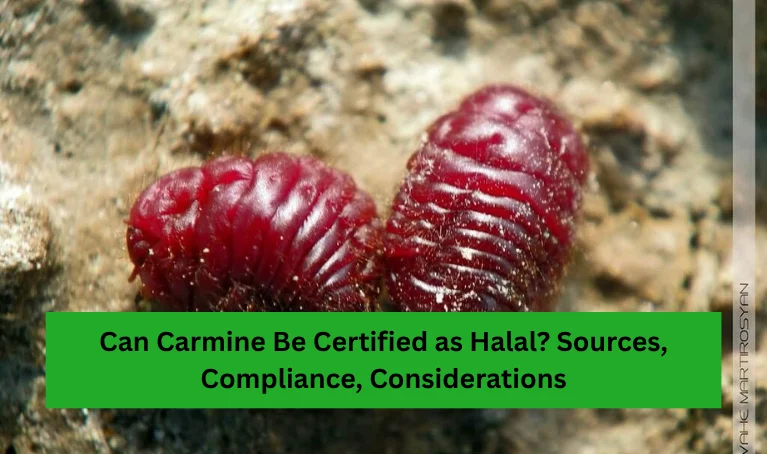
Can Carmine Be Certified as Halal? Sources, Compliance, Considerations

Carmine, also known as E120, is a red colorant derived from cochineal insects and widely used in food, beverages, and cosmetic products. Its origin from insects raises important questions regarding Halal compliance under Islamic law. While some scholars allow its use in food under strict transformation rules (Istihalah), it is prohibited in cosmetics and non-ingestible products. Understanding the source, production process, and Shariah perspectives is crucial for businesses, manufacturers, and consumers seeking Halal certification.

What Is Carmine?

Carmine is a natural red pigment extracted from cochineal insects. Producers dry, crush, and process these insects to produce a concentrated dye used for coloring foods, beverages, and personal care products. They chemically refine the final product to obtain a stable pigment. While widely used in industrial applications, its origin from insects makes its Halal status a matter of scholarly interpretation and regulatory scrutiny.

Sources of Carmine

  • Cochineal Insects: The primary source of E120; insects are dried, boiled, and processed to extract the red pigment.
  • Natural Variants: Derived from other insects in small quantities but follow similar extraction methods.
  • Processed Forms: After extraction, chemical refinement produces a pigment suitable for consumption or industrial use.

Read Also: Is Lab Grown Meat Halal

Shariah Compliance and Carmine

Different Islamic schools of thought approach carmine differently:

  • Hanafi School: Allow carmine when Istihalah (transformation) occurs, meaning producers transform the impure insect into a chemically new, edible substance. They must ensure that all conditions are met: no alternatives exist, its usage is necessary, and it is safe for health.
  • Shafi’i, Maliki, and Hanbali Schools: Generally prohibit any substance derived from impure or forbidden sources, including insects, making carmine non-permissible in most contexts.
  • Cosmetic Applications: All schools consider carmine haram in non-ingestible products such as cosmetics because producers cannot justify the original impure source through Istihalah.

Must Read: Are Food Additives Halal?

Applications of Carmine

IndustryUsageNotes
Food & BeveragesColoring candies, juices, yogurtsMay be Halal under transformation rules
BakeryRed frosting, fillingsConditional Halal depending on sourcing
CosmeticsLipsticks, blush, eye shadowsNot Halal certified; prohibited
PharmaceuticalsCoatings for tabletsMust verify Halal compliance

Halal Considerations for Carmine

1. Source Verification

Halal compliance primarily focuses on the origin of carmine. If producers derive it from insects, they must evaluate it under Shariah principles, considering whether the substance can undergo Istihalah to become permissible for consumption.

2. Transformation (Istihalah)

In food applications, chemical or industrial processes can transform the original impure insect into a new, stable, and edible substance. Hanafi scholars may consider this transformation permissible, provided producers strictly follow all conditions.

Read More: The Role of Islamic Fiqh in Halal Certification

3. Necessity of Use

Carmine should only be used if there is no alternative coloring agent available. Halal standards emphasize minimal use of ingredients derived from potentially impure sources.

4. Safety for Human Consumption

Even if transformed, carmine must be safe and non-toxic for human health. Halal certification requires verification that the pigment meets safety and hygiene standards.

5. Food vs Cosmetics

Although some food products may become permissible under Istihalah, manufacturers strictly prohibit carmine in cosmetics, personal care, and topical products due to ethical and purity considerations.

6. Compliance Documentation

Manufacturers must maintain detailed documentation on sourcing, extraction, processing, and transformation methods to demonstrate compliance with Halal requirements.

7. Avoiding Cross-Contamination

Halal-certified facilities must ensure that carmine does not contact non-Halal or impure substances during storage, handling, or production. Segregation protocols are essential.

8. Transparent Labeling

Products containing carmine should clearly indicate its presence and origin. For Halal certification, transparency ensures consumers are fully informed and maintains trust.

You May Also Like: Halal vs Non-Halal Products: Key Differences

9. Certification Approval

Only recognized Halal certification bodies can assess whether carmine complies with Halal standards, considering both the source and the transformation process.

10. Ethical Considerations

Read Also: Halal Standards Required For Exporting to Singapore

How NHASA Can Help You

NHASA provides comprehensive Halal certification services for manufacturers using carmine or other challenging ingredients. We evaluate sourcing, extraction, and transformation processes, conduct on-site audits, and ensure compliance with Shariah principles. Our guidance helps businesses maintain operational integrity, meet regulatory requirements, and gain consumer trust in Halal-certified products.

Conclusion

Carmine (E120) presents a complex case in Halal certification due to its insect origin. While certain scholars allow producers to use it in food under strict transformation (Istihalah) conditions, they prohibit it in cosmetics and non-ingestible products. Businesses must carefully assess sources, processing, and ethical considerations before pursuing Halal certification. They must also maintain transparent documentation, conduct proper audits, and follow guidance from recognized authorities like NHASA to ensure compliance and build consumer confidence.

FAQs

Can carmine be Halal in food?

Yes, under Hanafi interpretations, producers may consider carmine permissible if they achieve chemical transformation (Istihalah), confirm that no alternatives exist, and ensure it is safe.

Is carmine Halal in cosmetics?

No, manufacturers prohibit carmine in cosmetics and personal care products regardless of processing.

What does Istihalah mean?

Istihalah refers to the transformation of an impure substance into a new, pure, and permissible form, such as converting carmine into a safe edible pigment.

How can businesses ensure carmine is Halal?

Businesses must verify sourcing, confirm transformation processes, maintain documentation, and obtain certification from recognized Halal authorities.

Are there alternatives to carmine for Halal products?

Yes, producers prefer plant-based colorants such as beetroot red, paprika, or annatto as alternatives for Halal-compliant products.

Categories
Blogs

What Are Halal Foods? Meaning, Principles & Certification Guide

Halal food refers to food and beverages that are permissible for consumption under Islamic law (Shariah). Halal does not only represent religious observance; it establishes a structured system for ethical sourcing, hygienic handling, lawful ingredients, and compliant processing. In today’s global market, halal food has become an established compliance standard followed by manufacturers, exporters, restaurants, and retailers worldwide. Understanding what qualifies as halal food is essential for businesses seeking certification and for consumers seeking confidence in product integrity.

What Is the Meaning of Halal Food?

The term halal is an Arabic word meaning “permissible” or “lawful.” In the context of food, halal refers to products that comply fully with Islamic dietary laws. Halal food must meet requirements related to ingredients, sourcing, slaughtering methods (for meat), processing, storage, and transportation. Compliance goes beyond avoiding prohibited items; it also requires maintaining procedural integrity throughout the supply chain. Therefore, authorities define halal food not only by its ingredients but also by how producers handle, process, and distribute it.

You May Also Like: Halal vs Non-Halal Products

Halal and Tayyib: Beyond Just Permissible

While halal means permissible, the Quran also uses the term tayyib, meaning pure, wholesome, and safe. Together, halal and tayyib establish a broader framework for responsible food production. Tayyib emphasizes food safety, hygiene, quality, and ethical sourcing. A product may be technically halal in ingredients, but if it is unsafe, contaminated, or harmful, it does not fulfill the spirit of tayyib. For modern food businesses, this principle aligns closely with food safety systems, quality assurance protocols, and regulatory compliance standards.

Halal vs Haram Foods

Haram refers to anything prohibited under Islamic law. The following table provides a structured overview across categories:

CategoryHalal (Permissible)Haram (Prohibited)
Meat & PoultryAnimals slaughtered according to Islamic method (Zabiha)Pork and pork by-products; improperly slaughtered animals
SeafoodGenerally permissible (varies by school of thought)Specific restricted species (depending on interpretation)
BeveragesNon-intoxicating drinksAlcohol and intoxicants
IngredientsPlant-based, lawful animal-derived ingredientsBlood, gelatin from non-halal sources, enzymes from haram sources
Process & HandlingClean, uncontaminated processingCross-contamination with haram substances

Businesses must assess all categories, including additives, flavorings, processing aids, and supply chain inputs.

Key Principles That Define Halal Food

Permissible Ingredients

All ingredients used in food production must originate from halal sources that are verified through documented supplier approvals and material specifications. Animal-derived components must come from lawfully slaughtered animals, while pork and its derivatives are strictly prohibited in any quantity. Manufacturers are responsible for reviewing additives, flavorings, enzymes, and processing aids to ensure compliance. Effective ingredient traceability systems are essential to preserve halal integrity across the supply chain.

Proper Islamic Slaughter (Zabiha)

Producers must source meat products from animals slaughtered according to established Islamic guidelines. A qualified Muslim must perform the slaughter while invoking the name of Allah. The animal must remain alive and healthy before the procedure, and handlers must ensure humane treatment throughout. Proper blood drainage is necessary to ensure both religious compliance and product integrity.

Prevention of Cross-Contamination

Halal food must remain free from any direct or indirect contact with haram substances during production and handling. Facilities that process both halal and non-halal products must implement strict segregation controls. Facilities must validate cleaning and sanitation procedures to eliminate contamination risks effectively. Staff must continuously monitor operations and implement internal controls to maintain compliance at every stage.

Avoidance of Alcohol and Intoxicants

Alcohol and intoxicating substances are not permitted in halal food production. This applies to beverages as well as flavor extracts, preservatives, and processing aids containing alcohol. Products containing ethanol beyond permissible limits are considered non-compliant. Businesses must evaluate ingredient specifications carefully. Alternative halal-certified ingredients should be sourced to replace alcohol-based components where necessary.

Hygiene and Sanitation Standards

Halal principles emphasize cleanliness and structured hygiene management within food facilities. Facilities must maintain equipment, utensils, storage areas, and production lines according to defined sanitation protocols. Employees must follow personal hygiene standards that support food safety objectives. Strong sanitation systems reinforce both halal compliance and broader regulatory requirements.

Halal-Compliant Processing and Handling

Processing methods must not introduce prohibited substances or compromise halal status at any stage. All additives, preservatives, and processing aids must be verified as halal before use. Handling procedures should maintain product integrity from raw material intake to final packaging. Documented operational controls ensure that halal requirements are consistently applied.

Storage and Transportation Controls

Facilities must store halal products in clearly identified and segregated areas to prevent contamination. Producers must assess transportation systems to ensure that vehicles and containers do not carry prohibited materials. Packaging must provide adequate protection against external exposure or cross-contact risks. Proper logistical management preserves halal integrity throughout distribution.

Documentation and Traceability

Comprehensive documentation is required to demonstrate compliance with halal standards. Businesses must maintain supplier approvals, ingredient declarations, and process records. Batch-level traceability systems should enable tracking of raw materials through to finished products. Accurate records strengthen audit readiness and regulatory transparency.

Must Read: Halal vs Non-Halal Products

Ethical and Responsible Sourcing

Halal compliance extends to responsible and lawful sourcing practices across the supply chain. Suppliers must operate transparently and provide verifiable documentation of material origins. Procurement decisions should align with both Shariah requirements and quality standards. Ethical sourcing supports long-term consumer trust and sustainable business operations.

How to Identify Halal-Certified Products

Consumers and businesses can identify halal-certified products by checking for an official halal certification logo issued by a recognised certification body. The logo is typically displayed on packaging, menus, or product labels. In addition, certification bodies maintain directories of approved companies and products. Verification ensures that the product has undergone formal auditing and compliance assessment, rather than relying solely on ingredient claims.

How NHASA Can Help You

NHASA provides structured halal certification services designed to support businesses across food manufacturing, processing, restaurants, exports, and related industries. Our certification process includes ingredient review, supplier verification, on-site audits, documentation assessment, and compliance guidance aligned with Shariah requirements. We work closely with businesses to establish practical halal assurance systems that integrate with existing quality and food safety frameworks. By partnering with NHASA, organisations strengthen regulatory compliance, enhance market access, and build long-term consumer trust.

Read More: Halal Certification Requirements for Food Products 

Conclusion

Halal food represents more than dietary preference; it is a comprehensive compliance system rooted in Islamic law and ethical responsibility. From ingredient sourcing to final distribution, halal standards ensure that products meet defined religious, safety, and operational requirements. As global demand for halal-certified products continues to grow, businesses that implement structured halal systems position themselves for sustainable growth, regulatory alignment, and consumer confidence.

FAQs

Is halal food only about avoiding pork?

No. Halal compliance covers ingredients, slaughter methods, processing, storage, and contamination control—not just pork avoidance.

Is halal food safer than non-halal food?

Halal incorporates cleanliness and hygiene principles, but food safety ultimately depends on overall compliance with safety regulations and quality systems.

Can vegetarian food be halal?

Most plant-based foods are halal, provided they are free from alcohol, contamination, or prohibited additives.

Is halal certification mandatory?

It depends on the country and market requirements. For exports to certain regions, halal certification may be mandatory.

How long does halal certification take?

The timeline depends on business size, documentation readiness, and operational complexity.