
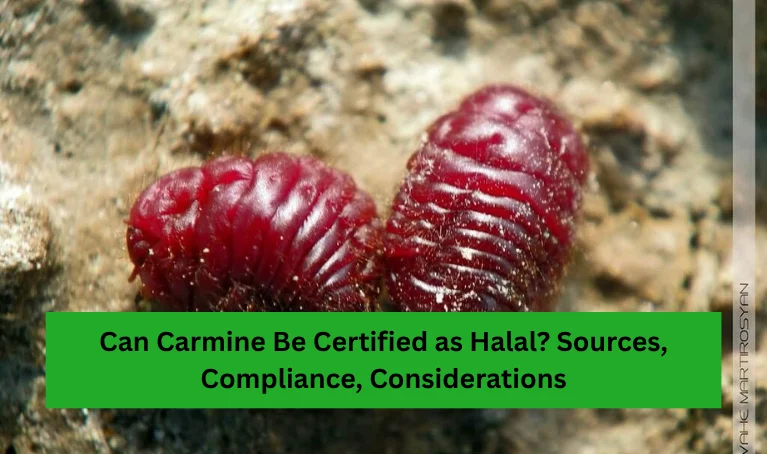
Carmine, also known as E120, is a red colorant derived from cochineal insects and widely used in food, beverages, and cosmetic products. Its origin from insects raises important questions regarding Halal compliance under Islamic law. While some scholars allow its use in food under strict transformation rules (Istihalah), it is prohibited in cosmetics and non-ingestible products. Understanding the source, production process, and Shariah perspectives is crucial for businesses, manufacturers, and consumers seeking Halal certification.
What Is Carmine?
Carmine is a natural red pigment extracted from cochineal insects. Producers dry, crush, and process these insects to produce a concentrated dye used for coloring foods, beverages, and personal care products. They chemically refine the final product to obtain a stable pigment. While widely used in industrial applications, its origin from insects makes its Halal status a matter of scholarly interpretation and regulatory scrutiny.
Sources of Carmine
- Cochineal Insects: The primary source of E120; insects are dried, boiled, and processed to extract the red pigment.
- Natural Variants: Derived from other insects in small quantities but follow similar extraction methods.
- Processed Forms: After extraction, chemical refinement produces a pigment suitable for consumption or industrial use.
Read Also: Is Lab Grown Meat Halal
Shariah Compliance and Carmine
Different Islamic schools of thought approach carmine differently:
- Hanafi School: Allow carmine when Istihalah (transformation) occurs, meaning producers transform the impure insect into a chemically new, edible substance. They must ensure that all conditions are met: no alternatives exist, its usage is necessary, and it is safe for health.
- Shafi’i, Maliki, and Hanbali Schools: Generally prohibit any substance derived from impure or forbidden sources, including insects, making carmine non-permissible in most contexts.
- Cosmetic Applications: All schools consider carmine haram in non-ingestible products such as cosmetics because producers cannot justify the original impure source through Istihalah.
Must Read: Are Food Additives Halal?
Applications of Carmine
| Industry | Usage | Notes |
|---|---|---|
| Food & Beverages | Coloring candies, juices, yogurts | May be Halal under transformation rules |
| Bakery | Red frosting, fillings | Conditional Halal depending on sourcing |
| Cosmetics | Lipsticks, blush, eye shadows | Not Halal certified; prohibited |
| Pharmaceuticals | Coatings for tablets | Must verify Halal compliance |
Halal Considerations for Carmine
1. Source Verification
Halal compliance primarily focuses on the origin of carmine. If producers derive it from insects, they must evaluate it under Shariah principles, considering whether the substance can undergo Istihalah to become permissible for consumption.
2. Transformation (Istihalah)
In food applications, chemical or industrial processes can transform the original impure insect into a new, stable, and edible substance. Hanafi scholars may consider this transformation permissible, provided producers strictly follow all conditions.
Read More: The Role of Islamic Fiqh in Halal Certification
3. Necessity of Use
Carmine should only be used if there is no alternative coloring agent available. Halal standards emphasize minimal use of ingredients derived from potentially impure sources.
4. Safety for Human Consumption
Even if transformed, carmine must be safe and non-toxic for human health. Halal certification requires verification that the pigment meets safety and hygiene standards.
5. Food vs Cosmetics
Although some food products may become permissible under Istihalah, manufacturers strictly prohibit carmine in cosmetics, personal care, and topical products due to ethical and purity considerations.
6. Compliance Documentation
Manufacturers must maintain detailed documentation on sourcing, extraction, processing, and transformation methods to demonstrate compliance with Halal requirements.
7. Avoiding Cross-Contamination
Halal-certified facilities must ensure that carmine does not contact non-Halal or impure substances during storage, handling, or production. Segregation protocols are essential.
8. Transparent Labeling
Products containing carmine should clearly indicate its presence and origin. For Halal certification, transparency ensures consumers are fully informed and maintains trust.
You May Also Like: Halal vs Non-Halal Products: Key Differences
9. Certification Approval
Only recognized Halal certification bodies can assess whether carmine complies with Halal standards, considering both the source and the transformation process.
10. Ethical Considerations
Islam emphasizes ethical consumption and purity. Even if chemically transformed, using insects in products raises ethical concerns; businesses should prioritize plant-based or permissible alternatives where possible.
Read Also: Halal Standards Required For Exporting to Singapore
How NHASA Can Help You
NHASA provides comprehensive Halal certification services for manufacturers using carmine or other challenging ingredients. We evaluate sourcing, extraction, and transformation processes, conduct on-site audits, and ensure compliance with Shariah principles. Our guidance helps businesses maintain operational integrity, meet regulatory requirements, and gain consumer trust in Halal-certified products.
Conclusion
Carmine (E120) presents a complex case in Halal certification due to its insect origin. While certain scholars allow producers to use it in food under strict transformation (Istihalah) conditions, they prohibit it in cosmetics and non-ingestible products. Businesses must carefully assess sources, processing, and ethical considerations before pursuing Halal certification. They must also maintain transparent documentation, conduct proper audits, and follow guidance from recognized authorities like NHASA to ensure compliance and build consumer confidence.
FAQs
Can carmine be Halal in food?
Yes, under Hanafi interpretations, producers may consider carmine permissible if they achieve chemical transformation (Istihalah), confirm that no alternatives exist, and ensure it is safe.
Is carmine Halal in cosmetics?
No, manufacturers prohibit carmine in cosmetics and personal care products regardless of processing.
What does Istihalah mean?
Istihalah refers to the transformation of an impure substance into a new, pure, and permissible form, such as converting carmine into a safe edible pigment.
How can businesses ensure carmine is Halal?
Businesses must verify sourcing, confirm transformation processes, maintain documentation, and obtain certification from recognized Halal authorities.
Are there alternatives to carmine for Halal products?
Yes, producers prefer plant-based colorants such as beetroot red, paprika, or annatto as alternatives for Halal-compliant products.
Unsure about an ingredient in your product?
Colourants, emulsifiers and processing aids hold up more halal applications than anything else. Send us your ingredient list and we will check it.
Additives and halal statusTalk to us