
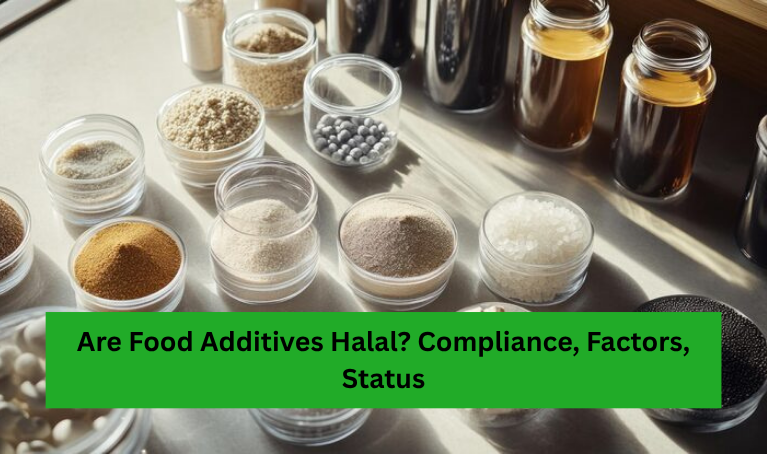
Food additives are widely used in modern food production to improve flavor, appearance, texture, and shelf life. For Muslim consumers and businesses, it is essential to determine whether these additives comply with Halal standards under Islamic law. Halal compliance is not limited to the primary ingredients of food; it extends to additives, processing aids, and any substances that come into contact with food during manufacturing. Understanding the Halal status of additives ensures that consumption or use aligns with Shariah requirements and maintains consumer confidence.
Related: Halal vs Non-Halal Products
What Are Food Additives?
Food additives are substances intentionally added to food products to enhance qualities such as flavor, texture, color, preservation, or nutritional value. These include stabilizers, emulsifiers, preservatives, colorings, flavor enhancers, and processing aids. Additives may be derived from plant, animal, or synthetic sources, and their origin determines their permissibility under Halal law. Even small amounts of prohibited substances in additives can render a product non-compliant, making verification and traceability critical for businesses and consumers alike.
Understanding Halal Compliance in Food Ingredients
Halal compliance in food ingredients requires that substances are sourced, processed, and handled in accordance with Islamic law. Ingredients derived from prohibited animals (such as pigs) or containing alcohol are considered Haram. Additionally, cross-contamination with non-Halal substances must be prevented at all stages of production. For additives, compliance also requires documentation of source, processing methods, and any transformation the ingredient undergoes. Regulatory oversight, certification, and adherence to recognized Halal standards help ensure that additives meet these requirements.
Related: Halal Certification Requirements for Food Products
Factors That Determine Whether Food Additives Are Halal or Haram
1. Source of the Additive
The origin of an additive is the primary factor in determining its Halal status. Additives derived from permissible plant sources are generally Halal, whereas those from prohibited animals such as pigs are Haram. Verification of the source through supplier documentation is essential to ensure compliance with Shariah principles.
2. Presence of Alcohol
Additives containing alcohol or produced using alcohol-based solvents are generally considered Haram. Even trace amounts of ethanol may render the additive non-compliant. Businesses must review ingredient specifications and sourcing processes to avoid non-compliant substances.
3. Animal-Derived Ingredients
Additives sourced from animal fats, gelatin, or enzymes require careful evaluation. If derived from non-Halal animals or animals not slaughtered according to Islamic law, the additive is Haram. Halal certification and documentation are necessary to verify permissibility.
4. Transformation or Istihalah
Some additives undergo chemical or physical transformation, known as Istihalah, which can alter their permissibility. Scholars may allow certain transformed substances as Halal if they no longer retain Haram properties. Assessment by qualified authorities is essential to determine acceptability.
Related: Role of Islamic (Fiqh) Experts in Halal Certification
5. Contamination Risk
Cross-contact with Haram substances during production, storage, or transportation can compromise the additive’s Halal status. Facilities must implement strict segregation and cleaning protocols. Continuous monitoring reduces the risk of contamination and ensures compliance.
6. Processing Aids
Substances used as processing aids in the manufacturing process must also be Halal. Even if not present in the final product, they can impact overall compliance if derived from Haram sources. Documentation and verification of all processing aids are critical.
7. Additive Function and Necessity
The purpose and necessity of the additive are also considered. Some scholars recommend limiting additives that could be substituted with Halal alternatives. Ethical sourcing and responsible usage align with Halal and Tayyib principles.
8. Regulatory Standards
Compliance with recognized Halal standards and guidelines ensures additives are evaluated systematically. Certification by accredited bodies strengthens verification. Adherence to standards protects businesses from non-compliance risks.
9. Supplier Transparency
Reliable supplier information is necessary for tracing the origin, processing, and composition of additives. Lack of transparency may lead to uncertainty about Halal status. Businesses should request detailed certificates and ingredient declarations.
10. Documentation and Record-Keeping
Proper record-keeping of sourcing, manufacturing, and quality control supports audit readiness and certification. Documentation provides evidence of compliance and enhances accountability. Continuous monitoring ensures ongoing Halal integrity.
You May Also Like: How to Conduct a Halal Audit
Common Food Additives and Their Halal or Haram Status
| Additive | Halal/Haram | Reason |
|---|---|---|
| Gelatin | Haram (unless Halal-certified) | Derived from pork or non-Halal slaughtered animals |
| Mono- and Diglycerides (E471) | Conditional | Halal if sourced from plant-based or Halal-slaughtered animals |
| Lecithin | Halal | Usually derived from soy or sunflower seeds; plant-based sources are permissible |
| Glycerol | Conditional | Halal if sourced from plants or Halal animal fat; otherwise Haram |
| Enzymes | Conditional | Must be from Halal animals or microbial sources; non-Halal animal sources are prohibited |
| Aspartame | Halal | Synthetic and plant-based, no Haram components |
| Carrageenan | Halal | Derived from seaweed; plant-based source makes it permissible |
| Alcohol-Based Flavors | Haram | Alcohol is prohibited in food products under Islamic law |
| Citric Acid | Halal | Can be plant-based or microbial, generally acceptable |
| Emulsifiers | Conditional | Source must be verified; plant-based usually Halal, animal-based requires certification |
How Consumers and Businesses Can Identify Halal Additives
Consumers and businesses can identify Halal additives by checking for certification logos on packaging, reviewing ingredient specifications, and requesting supplier documentation. Certification by a recognized Halal authority confirms that all ingredients, including additives and processing aids, have been verified for compliance. Transparency in labeling and direct communication with manufacturers reduces uncertainty and ensures adherence to Shariah principles. Businesses should implement internal verification processes to maintain consistent Halal integrity across all products.
How NHASA Can Help You
NHASA provides advisory and certification services for food production businesses. Our services include ingredient verification, supplier audits, on-site inspections, documentation review, and Shariah compliance assessment. We help companies establish Halal assurance systems that integrate with quality control and food safety protocols. By partnering with NHASA, businesses gain credible certification, market access, and consumer trust in their Halal products.
Conclusion
Determining the Halal status of food additives requires a careful evaluation of source, processing methods, and potential contamination. Additives derived from Haram sources or containing alcohol are prohibited, while plant-based or Halal-certified alternatives are permissible. Businesses and consumers must rely on proper documentation, certification, and supplier transparency to ensure compliance. Understanding these factors helps maintain the integrity of Halal products and supports confidence in food consumption.
FAQs
Are all food additives Halal?
No. The Halal status depends on the source, processing, and potential contamination of the additive.
Is gelatin always Haram?
Gelatin is Haram if derived from pork or non-Halal-slaughtered animals, but plant-based or Halal-certified gelatin is permissible.
Can synthetic additives be Halal?
Yes. Synthetic or chemically produced additives that do not contain Haram components are generally Halal.
How can businesses ensure additive compliance?
By requesting supplier documentation, verifying sources, and obtaining Halal certification from accredited authorities.
Does Halal certification cover all additives in a product?
Yes, credible Halal certification assesses both primary ingredients and all additives or processing aids for compliance.
Additives are where most halal applications stall.
Emulsifiers, enzymes, carriers and cleaning agents all need a verifiable status. Start collecting supplier documentation before you apply, not after we ask.
How certification worksTalk to us