
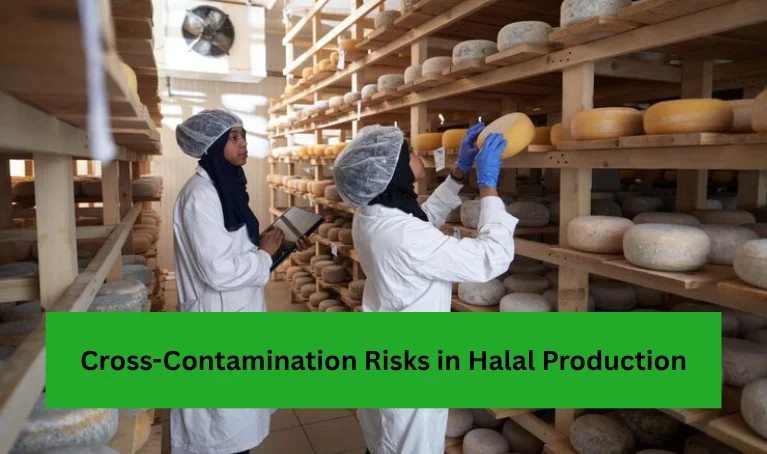
Cross-contamination in Halal production refers to the unintended contact of Halal products with Haram substances, ingredients, or processes that compromise their religious compliance. This risk is significant because Halal standards encompass not only permissible ingredients but also ethical handling, storage, and processing practices. Effective management of cross-contamination is essential for maintaining Shariah compliance, protecting consumer trust, and meeting regulatory requirements. This guide explores the risks, consequences, and mitigation strategies in a structured, practical manner for food producers and businesses.
Understanding Cross-Contamination in the Halal Context
Cross-contamination occurs when Halal food comes into contact with non-Halal ingredients, surfaces, equipment, or personnel, thereby compromising its permissibility. In a Halal context, this includes contamination from pork derivatives, non-Halal meat, alcohol, or any prohibited additives. The scope extends beyond ingredients to encompass processing lines, storage facilities, utensils, packaging, and transportation. Understanding the full range of contamination risks is critical for Halal compliance and is a core requirement for certification and audit readiness.
Helpful for you: Halal vs Halal-Friendly: What’s the Difference?
Cross-Contamination Risks in Halal Production
1. Shared Equipment and Utensils
Using the same cutting boards, knives, or mixers for Halal and non-Halal products can result in direct contamination. Even trace residues of Haram substances compromise the Halal status of products. Facilities must implement dedicated equipment or validated cleaning protocols. Documentation of cleaning procedures is essential to demonstrate compliance.
2. Inadequate Cleaning and Sanitation
Insufficient sanitation between production runs increases the likelihood of cross-contact. Harms can arise from residual fats, oils, flavorings, and food additives originating from non-Halal sources that remain on equipment or surfaces. Structured cleaning schedules, validated procedures, and routine inspections are necessary to maintain operational integrity and consistent compliance. Proper cleaning prevents contamination, ensures removal of prohibited substances including food additives, and supports overall food safety and quality standards.
3. Shared Storage Areas
Storing Halal and non-Halal ingredients or products in the same warehouse without segregation risks cross-contamination. Containers or pallets can transfer traces of Haram substances. Segregation by location, labeling, and physical barriers is essential. Temperature-controlled storage must also adhere to these separation protocols.
Also Read: How Restaurants Can Maintain Halal Compliance
4. Supplier and Ingredient Mislabeling
Receiving raw materials with unclear or incorrect labeling can introduce non-Halal ingredients into production lines. Suppliers must provide clear ingredient declarations and certifications. Verification procedures, including documentation review and periodic audits, help mitigate this risk. Traceability ensures Halal compliance from source to product.
5. Cross-Contamination During Transportation
Halal products transported in shared vehicles with non-Halal goods face a risk of contamination. Residual particles, spills, or improper cleaning can compromise Halal integrity. Using dedicated transport or validated cleaning procedures is critical. Proper documentation of transport compliance reinforces operational accountability.
6. Human Handling and Training Gaps
Employees unaware of Halal requirements may inadvertently contaminate products. Handling Halal and non-Halal items without proper training or PPE increases risks. Staff education programs, clear SOPs, and supervision ensure adherence to religious and operational standards. Human factors are often a leading source of contamination.
Must Read: Importance of Halal Training for Quality Personnel
7. Cross-Contact Through Additives or Flavorings
Non-Halal emulsifiers, stabilizers, or flavorings can contaminate Halal products if shared across production lines. Verification of each additive’s source and composition is essential. Certification of raw materials helps prevent accidental introduction of Haram substances. Maintaining supplier transparency is critical for compliance.
8. Inadequate Packaging Practices
Packaging Halal products in materials previously used for non-Halal items may transfer traces of contamination. Packaging lines must be segregated or thoroughly cleaned. Labeling must clearly indicate Halal compliance to prevent consumer confusion. Proper packaging safeguards both religious and quality standards.
9. Airborne or Environmental Contamination
Dust, vapors, or aerosolized particles from Haram products in shared production environments may contaminate Halal food. Proper ventilation, physical separation, and airflow management minimize this risk. Environmental monitoring ensures that cross-contamination does not occur indirectly.
10. Errors in Documentation and Traceability
Incomplete or inaccurate records of ingredients, processes, or handling can lead to unintentional Halal breaches. Traceability failures make it difficult to verify compliance during audits. Structured documentation, real-time monitoring, and periodic review are essential to prevent contamination and demonstrate accountability.
Consequences of Cross-Contamination
1. Loss of Halal Certification
Cross-contamination with Haram substances can lead to suspension or revocation of Halal certification, affecting product legitimacy and market access. Businesses may need to implement corrective actions before certification is reinstated, delaying operations.
2. Legal and Regulatory Non-Compliance
Contaminated Halal products may violate national food laws, leading to fines, penalties, or production restrictions. Export operations can also be impacted, as many countries require verified Halal compliance for imported products.
Must Read: Halal Certification Requirements for Food Products
3. Damage to Brand Reputation
Incidents of cross-contamination negatively affect consumer trust and brand perception. Reduced loyalty and public backlash may occur, and rebuilding credibility often requires significant time and resources.
4. Financial Losses from Recalls or Rejection
Contaminated products may need to be recalled or rejected by distributors, generating disposal, reprocessing, and logistical costs. Production downtime further increases financial impact and operational disruptions.
5. Compromise of Consumer Trust and Market Position
Cross-contamination undermines confidence among Muslim consumers and can reduce market share. Maintaining strict Halal compliance is essential for long-term customer loyalty and competitive positioning.
Strategies to Prevent Cross-Contamination
Effective prevention relies on a combination of operational, procedural, and technological measures. These include dedicated equipment, validated cleaning protocols, ingredient verification, physical segregation in storage and production, employee training, clear SOPs, environmental monitoring, transport segregation, and robust traceability systems. Integrating digital tools for monitoring and record-keeping can further enhance prevention and ensure consistent compliance with Halal standards.
You may also like: Emerging Technologies in Halal Certification
Role of Halal Certification in Mitigating Risks
Halal certification provides structured oversight to prevent cross-contamination. Certification bodies evaluate production processes, ingredient sourcing, handling procedures, sanitation practices, and documentation. Through audits and Shariah supervision, certification ensures that facilities maintain segregation, traceability, and operational controls. Certification also gives consumers and regulatory authorities confidence in the integrity of Halal products.
How NHASA Can Help You
NHASA offers comprehensive Halal certification for food manufacturers in Australia, along with advisory services designed to minimize cross-contamination risks and ensure full compliance. Our approach includes on-site audits, process evaluation, supplier verification, employee training programs, and implementation of validated cleaning protocols. We assist businesses in establishing robust Halal assurance systems that integrate seamlessly with existing quality and food safety frameworks. Partnering with NHASA ensures both regulatory compliance and strong consumer trust in your Halal-certified food products.
Conclusion
Cross-contamination is one of the most critical risks in Halal production, impacting religious compliance, operational integrity, and market trust. Understanding potential contamination sources, implementing preventive strategies, and obtaining formal Halal certification are essential for businesses. By maintaining structured controls, clear documentation, and rigorous supervision, producers can safeguard the Halal status of their products and strengthen consumer confidence.
FAQs
What is cross-contamination in Halal production?
Cross-contamination occurs when Halal products come into contact with Haram substances, ingredients, or processes, compromising religious compliance.
Can Halal products lose certification due to contamination?
Yes, even trace contamination from non-Halal sources can result in audit failure or certification suspension.
How can cross-contamination be prevented in shared facilities?
Segregation, validated cleaning protocols, staff training, and proper documentation are key preventive measures.
Does transport affect Halal compliance?
Yes, shared vehicles with non-Halal goods pose a risk unless properly cleaned and segregated.
How does Halal certification help mitigate risks?
Certification ensures structured oversight, process audits, ingredient verification, and supervisory compliance to prevent cross-contamination.
Segregation is what auditors examine hardest.
Shared lines, cleaning agents, storage and transport all form part of a halal audit. We will tell you what needs to change before the audit, not during it.
How certification worksTalk to us