
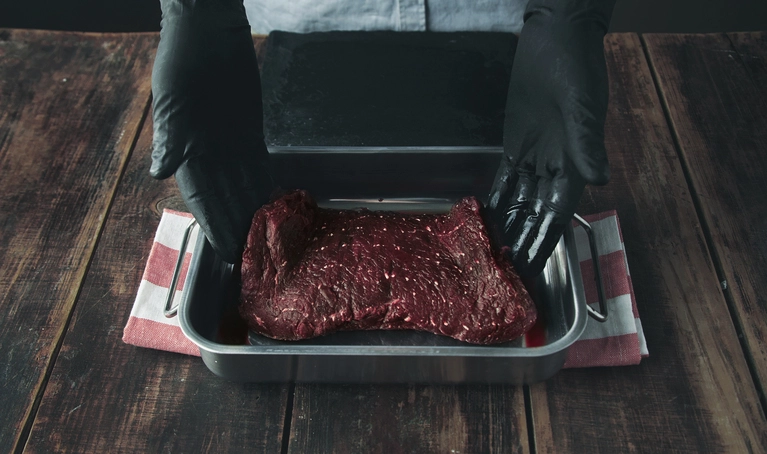
Lab-grown meat, also known as cultivated or cell-based meat, is emerging as a technological innovation within the global food industry. As this product enters regulated markets, an important question arises for Muslim consumers and businesses: does lab-grown meat comply with Islamic dietary laws? Halal compliance is defined not only by ingredients but also by sourcing, processing methods, contamination control, and adherence to Shariah principles. Therefore, determining the halal status of cultivated meat requires a structured analysis of its production process, cell sourcing, growth media composition, and regulatory oversight. This guide provides a practical and compliance-focused overview of the issue.
What Is Lab-Grown Meat?
Producers create lab-grown meat by extracting animal cells and cultivating them in a controlled environment with specialized growth media, enabling the cells to multiply and develop into muscle tissue without slaughtering the entire animal. Through this process, they aim to replicate conventional meat at the cellular level while reducing reliance on traditional livestock farming. Unlike plant-based meat alternatives, cultivated meat comes directly from animal cells, so its halal status depends on the origin of those cells, the composition of the growth medium, and the overall production controls the manufacturer implements.
Comparison of Lab Meat and Traditional Halal Meat
| Category | Lab-Grown Meat | Traditional Halal Meat |
|---|---|---|
| Source | Animal cells extracted and cultivated | Whole animal slaughtered |
| Slaughter Requirement | Depends on origin of initial cells | Mandatory Islamic slaughter (Zabiha) |
| Growth/Feeding | Nutrient growth medium in lab | Natural feeding of animal |
| Contamination Risk | Controlled laboratory environment | Slaughterhouse and processing facility controls |
| Halal Status | Conditional and under scholarly review | Clearly defined under Shariah |
Lab-Grown Meat Production Process
Cell Extraction
Producers begin the process by extracting living cells from an animal, typically through a biopsy. Whether this step is permissible depends on whether the animal belongs to a halal species and whether it was slaughtered according to Islamic requirements. If producers extract cells from a non-halal animal or from an animal that they did not slaughter Islamically, they may compromise the entire production chain. To ensure proper compliance evaluation, manufacturers must maintain clear documentation and traceability of the donor animal.
Cell Cultivation and Multiplication
Once extracted, the cells are placed in a controlled environment that stimulates growth and multiplication. These cells divide and develop into muscle tissue under regulated temperature and nutrient conditions. The integrity of this stage depends on the purity of the environment and the absence of non-halal additives. Strict contamination controls must be implemented to maintain halal integrity throughout cultivation.
Growth Medium Application
The growth medium provides nutrients that enable cellular development, and it is one of the most critical halal compliance factors. Some early technologies used fetal bovine serum, which raises significant Shariah concerns if sourced improperly. For halal consideration, the growth medium must be free from haram substances and derived from permissible sources. Transparency in ingredient composition is mandatory.
Harvesting and Processing
After sufficient tissue growth, the cultivated meat is harvested and shaped into final products. This stage must follow halal handling, storage, and processing controls similar to conventional meat operations. Segregation from non-halal materials and validated cleaning protocols are essential. Final processing must not introduce prohibited additives or cross-contamination risks.
Also read: Emerging Technologies in Halal Certification
Requirements for Lab-Grown Meat to Be Halal
Halal Species of Donor Animal
Producers must source the original cells from an animal that is permissible under Islamic law, such as cattle, sheep, or poultry. Cells derived from pigs or other prohibited species automatically invalidate halal status. Scholars consider the permissibility of the species the foundational requirement for further evaluation. Without meeting this condition, producers cannot establish compliance.
Proper Islamic Slaughter of a Donor Animal
Scholars widely emphasize that producers must ensure the animal has been slaughtered according to Islamic law before taking initial cells. They regard the invocation of Allah’s name and proper blood drainage as central requirements for halal compliance. If producers extract cells before slaughter or from an animal that has not been slaughtered Islamically, they create scholarly disagreement. Therefore, certifying bodies strongly recommend that producers maintain documented Zabiha compliance.
Lawful Cell Extraction Method
The biopsy or extraction process must not involve cruelty or unlawful harm to the animal. If the animal is alive at extraction, scholars assess whether this impacts permissibility. Ethical treatment and procedural transparency are required. Clear documentation helps certification bodies evaluate Shariah compliance.
Helpful for you: How to Conduct a Halal Audit
Halal-Compliant Growth Medium
All nutrients, serums, and additives used in cultivation must be halal-certified or verified as permissible. The presence of blood-derived or non-halal enzymes compromises compliance. Manufacturers must obtain full disclosure from suppliers. Ingredient traceability remains essential.
Absence of Haram Additives
Manufacturers must review all flavorings, stabilizers, colorants, and preservatives added during processing to ensure halal compliance. Hidden derivatives from non-halal sources pose a significant risk factor. Companies must document and verify each additive carefully. They should not use any alcohol-based processing aids at any stage of production.
Prevention of Cross-Contamination
Facilities producing lab-grown meat must prevent contact with haram substances. Shared equipment with non-halal materials requires validated cleaning and segregation procedures. Dedicated production lines strengthen compliance credibility. Continuous monitoring reduces contamination risks.
Traceability and Documentation
End-to-end traceability from donor animal to final packaged product is mandatory. Documentation must cover sourcing, cultivation inputs, processing steps, and distribution channels. Without structured records, certification cannot be granted. Transparency supports audit readiness.
Must Read: Halal Requirements for Exporting Food from Australia
Compliance with Food Safety Standards
Halal principles align with safety and hygiene requirements. Facilities must operate under recognized food safety management systems such as HACCP. Safe handling reinforces the concept of tayyib (wholesome). Regulatory compliance strengthens halal integrity.
Shariah Supervisory Oversight
Qualified Shariah scholars or halal certification authorities should review and supervise the process. Independent oversight ensures religious compliance beyond technical documentation. Continuous review is necessary as technology evolves. This oversight strengthens consumer trust.
Also Read: Role of Islamic (Fiqh) Experts in Halal Certification
Regulatory and Certification Approval
The product must meet national food regulations alongside halal standards. Certification bodies evaluate documentation, conduct audits, and verify operational controls. Without formal certification, halal claims lack credibility. Regulatory approval complements Shariah compliance.
Religious Perspectives on Lab-Grown Meat
Global Islamic jurisprudence councils continue to actively discuss scholarly opinions on lab-grown meat. Some scholars consider cultivated meat potentially halal if producers meet all Shariah conditions, particularly regarding cell sourcing and growth medium composition. Others raise concerns about the absence of traditional slaughter and the transformation process involved in cell multiplication. As the technology develops, jurists continue to interpret and evaluate its implications.
Fatwa Considerations
In 2023, Singapore’s Islamic Religious Council (MUIS) indicated conditional permissibility if cells originate from halal-slaughtered animals and growth media are halal-compliant. Scholars in the UAE have also discussed conditional approval under strict compliance controls. Conversely, several scholars in other jurisdictions maintain caution until full transparency in cell sourcing and serum alternatives is ensured. The International Islamic Fiqh Academy has acknowledged the issue as contemporary and requiring continued scholarly evaluation. Therefore, no universal ruling currently exists, and permissibility remains conditional.
Can Lab-Grown Meat Be Halal Certified?
Lab-grown meat may be eligible for halal certification if it meets all Shariah and operational compliance requirements. Certification bodies will assess donor animal sourcing, slaughter documentation, growth media composition, processing controls, and contamination prevention systems. Structured audits and ingredient verification are mandatory before approval. Without full transparency and compliance, certification is unlikely to be granted.
How NHASA Can Help You?
NHASA provides structured halal advisory and certification services tailored to emerging food technologies, including cultivated meat production. Our process includes Shariah evaluation, ingredient verification, documentation review, and on-site compliance audits. We work closely with manufacturers to establish halal assurance systems aligned with both regulatory and Islamic requirements. Through structured guidance and supervisory oversight, NHASA supports businesses seeking clarity, compliance, and market credibility.
Conclusion
Lab-grown meat presents a complex but manageable halal compliance question. Its permissibility depends on donor animal status, slaughter compliance, growth medium composition, contamination controls, and scholarly evaluation. As technology advances, structured halal governance will play a critical role in determining market acceptance. Businesses seeking entry into Muslim markets must prioritize transparency, documentation, and certification readiness.
FAQs
1. Is lab-grown meat automatically halal?
No. Its halal status depends on cell source, slaughter compliance, growth medium, and contamination controls.
Does the donor animal need to be slaughtered Islamically?
Most scholars recommend proper Islamic slaughter to ensure compliance.
Is fetal bovine serum halal?
It depends on sourcing and slaughter compliance; many scholars require halal-certified alternatives.
Has any country officially declared lab-grown meat halal?
Some jurisdictions have issued conditional opinions, but no universal global ruling exists.
Can lab-grown meat receive halal certification?
Yes, producers can achieve halal status if they meet all Shariah and operational compliance requirements and verify them through an audit.