
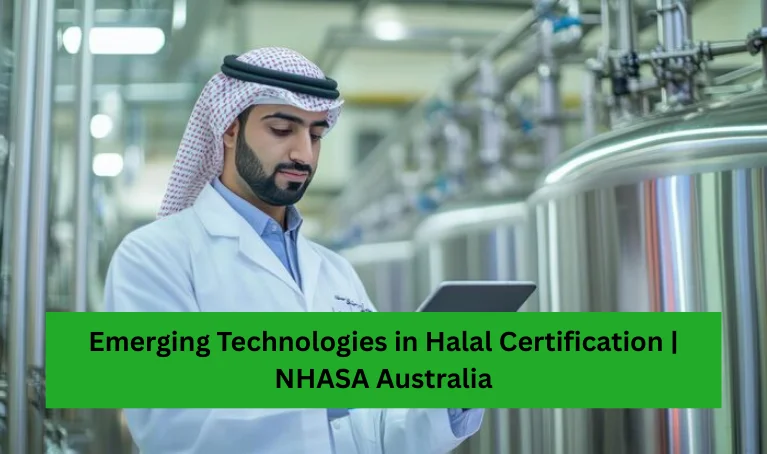
Technology is playing a transformative role in modern Halal compliance, making it faster, more accurate, and more reliable than ever before. By integrating digital tools into daily operations, businesses can monitor ingredients, production, and supply chains in real time, reducing the risk of non-compliance or contamination. Automated systems, IoT devices, and AI algorithms allow for predictive risk analysis, ensuring proactive compliance rather than reactive problem-solving. Moreover, technology supports comprehensive record-keeping, seamless audits, and better staff training, which collectively enhance operational efficiency, regulatory adherence, and consumer confidence in Halal-certified products.
Emerging Technologies and Their Impact on Halal Certification
1. Blockchain Technology
Blockchain technology provides a secure, decentralized ledger that records every transaction in the supply chain, making it impossible to alter or tamper with data.
Impact on Halal Certification:
- Complete traceability of ingredients from origin to final product
- Transparent and verifiable supplier records
- Reduced risk of fraud or mislabeling
- Faster verification during audits
- Increased consumer confidence in Halal claims
2. Artificial Intelligence (AI)
Artificial intelligence uses advanced algorithms to analyze complex datasets and identify patterns that may indicate non-compliance or risk factors.
Impact on Halal Certification:
- Predictive identification of compliance gaps before audits
- Automated monitoring of production processes and ingredient quality
- Streamlined auditing workflows
- Proactive recommendations for process improvement
- Reduced human error and operational inefficiencies
3. Internet of Things (IoT)
IoT devices, such as smart sensors, monitor environmental conditions like temperature, humidity, and handling throughout production and storage.
Impact on Halal Certification:
- Continuous monitoring of storage and production areas
- Alerts for potential contamination or deviations
- Ensures segregation between Halal and non-Halal products
- Supports regulatory compliance documentation
- Enhances overall product safety and quality
Also Read: Benefits of Halal Certification for Pharmaceutical Companies
4. Digital Traceability Systems
Digital traceability platforms maintain a complete record of ingredients, production stages, and supply chain movements.
Impact on Halal Certification:
- Full visibility of raw material origins and handling processes
- Quick verification for auditors and certification authorities
- Minimizes risks of non-compliance
- Ensures accurate reporting for regulatory and consumer requirements
- Strengthens supply chain accountability
5. Cloud-Based Compliance Management
Cloud platforms centralize compliance records, supplier certifications, SOPs, and audit reports, accessible from anywhere at any time.
Impact on Halal Certification:
- Simplifies document management and retrieval during audits
- Enables collaborative review by multiple teams or authorities
- Reduces administrative errors and data loss
- Supports remote audits and pre-certification checks
- Increases operational efficiency and audit preparedness
Helpful for you: Why Halal Certification is Important for Businesses
6. RFID and Barcode Tracking
RFID tags and barcode systems allow real-time identification and tracking of products through every stage of production, logistics, and storage.
Impact on Halal Certification:
- Prevents mixing of Halal and non-Halal items
- Real-time product tracking for accuracy and accountability
- Ensures compliance with Halal handling and storage requirements
- Speeds up auditing and certification verification
- Enhances consumer trust in product integrity
7. Big Data Analytics
Big data analytics examines large datasets from production, supply chains, and audits to detect patterns and predict risks.
Impact on Halal Certification:
- Identifies recurring non-compliance or process inefficiencies
- Supports strategic planning for Halal operations
- Enhances audit readiness with actionable insights
- Enables proactive risk management
- Provides data-driven reporting to regulators and consumers
You May Also Like: How to Get Halal Certification in Australia
8. Mobile Compliance Applications
Mobile apps allow on-the-go monitoring, reporting, and real-time communication between staff, auditors, and management.
Impact on Halal Certification:
- Facilitates remote inspections and instant issue reporting
- Reduces delays caused by manual processes
- Ensures staff adherence to Halal procedures
- Provides digital checklists for consistent audits
- Strengthens accountability across all production stages
9. Automated Audit Tools
Software-driven audit tools guide auditors through structured compliance checks and documentation reviews.
Impact on Halal Certification:
- Reduces human error during audits
- Ensures all Halal compliance areas are thoroughly reviewed
- Speeds up certification approval processes
- Provides digital reports and corrective action tracking
- Improves overall accuracy and efficiency of audits
10. Digital Training and e-Learning Platforms
Online training platforms deliver Halal compliance education for staff, management, and suppliers through interactive modules.
Impact on Halal Certification:
- Ensures consistent understanding of Halal principles and procedures
- Reduces mistakes in production, handling, and storage
- Enhances audit preparedness and readiness
- Enables scalable staff training across multiple locations
- Supports long-term compliance culture and operational integrity
Future Trends in Halal Certification Technology
- AI-Powered Predictive Compliance: Predicts potential gaps and recommends corrective measures before issues occur.
- Fully Digital Supply Chains: End-to-end traceability of every ingredient and process.
- IoT-Enabled Real-Time Monitoring: Continuous surveillance to prevent contamination and improve safety.
- Blockchain for Instant Verification: Certification authorities can quickly confirm authenticity of ingredients and suppliers.
- Global Halal Data Networks: Shared databases enhance cross-border compliance and auditing efficiency.
- AR/VR-Based Training: Immersive platforms for interactive staff training on Halal procedures.
- Smart Contracts with Halal Suppliers: Automatic compliance verification before processing or delivery.
- Cloud-Based Collaborative Audits: Real-time coordination between auditors and businesses across locations.
- AI Ingredient Scanners: Automatically detect non-Halal ingredients in products and raw materials.
- Integration with ESG Frameworks: Halal certification tools increasingly align with sustainability and ethical business practices.
Conclusion
Emerging technologies are reshaping Halal certification by improving traceability, accuracy, and operational efficiency. Blockchain, AI, IoT, digital traceability, and automated audit tools allow businesses to maintain compliance proactively, reduce human error, and enhance consumer confidence. Furthermore, these technologies support ongoing monitoring, staff training, and supply chain transparency, ensuring that Halal-certified products consistently meet both religious and regulatory standards. For businesses in Australia, adopting these innovations is no longer optional — it is a strategic advantage that strengthens credibility, market access, and sustainable growth.
FAQs
What is a Halal audit?
A Halal audit assesses whether products, processes, and operations comply with Islamic law, ensuring ethical and religious adherence.
How does technology help Halal certification?
Technology improves traceability, monitoring, documentation, and auditing efficiency, making compliance faster, accurate, and more reliable.
Which technologies are most important for Halal compliance?
Blockchain, AI, IoT, cloud compliance platforms, automated audits, and e-learning for staff are currently transforming Halal certification.
Are these technologies suitable for all industries?
Yes, food, pharmaceutical, cosmetics, logistics, and service industries all benefit from these innovations.
How can NHASA assist?
NHASA provides expert guidance on implementing technology-driven Halal compliance solutions, audits, and staff training across Australia.