
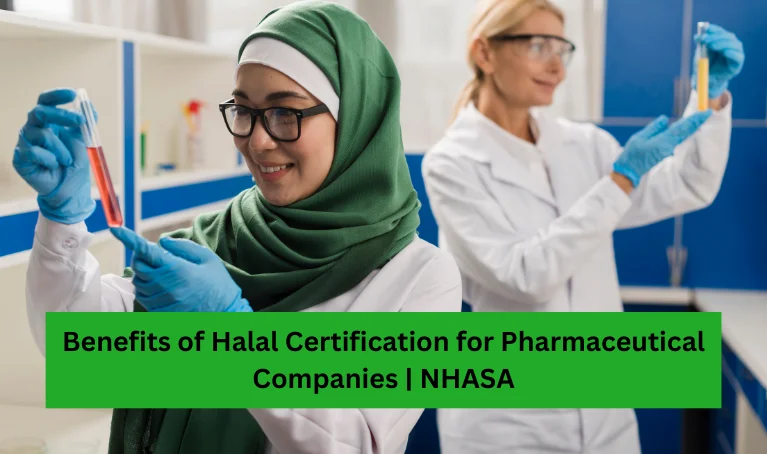
Pharmaceutical companies operate in one of the most regulated and quality-sensitive industries worldwide. With growing demand for ethical, transparent, and compliant medicines, Halal certification has become increasingly important beyond traditional food sectors. Many manufacturers now seek Halal certification to meet international market requirements, improve product credibility, and ensure ingredient compliance. For pharmaceutical companies, Halal certification supports both regulatory alignment and consumer trust. When implemented correctly, it strengthens quality systems while opening access to fast-growing global markets.
What Is Halal Certification for Pharmaceuticals?
Halal certification for pharmaceuticals is a formal verification that medicines, supplements, vaccines, and related products comply with Islamic guidelines. It ensures that ingredients, manufacturing processes, handling, and storage are free from Haram (prohibited) substances and contamination risks. This includes strict evaluation of excipients, active pharmaceutical ingredients (APIs), capsules, coatings, and processing aids. Halal certification also examines sourcing, traceability, hygiene, and quality control systems. The certification confirms that products are safe, ethical, and permissible for Muslim consumers worldwide.
Why Halal Certification Matters for Pharmaceutical Companies
Halal certification matters because pharmaceutical products often contain complex ingredients derived from animal, microbial, or synthetic sources. Without proper verification, companies may unknowingly use non-compliant materials that limit market access. Halal certification provides clarity, transparency, and confidence across the supply chain. It helps pharmaceutical companies meet regulatory expectations in Muslim-majority countries and increasingly in global export markets. More importantly, it strengthens brand trust, reduces compliance risks, and supports long-term business sustainability.
Benefits of Halal Certification for Pharmaceutical Companies
1. Access to Global Halal Markets
Halal certification enables pharmaceutical companies to enter Muslim-majority markets across Asia, the Middle East, Africa, and Europe. Many countries require Halal certification for product registration or public procurement. Certified products face fewer regulatory barriers and faster approval processes. This expands export opportunities and revenue potential. Halal certification positions pharmaceutical brands for international growth.
2. Increased Consumer Trust and Confidence
Consumers increasingly demand transparency in medicine composition and manufacturing practices. Halal certification assures patients that products meet ethical, safety, and religious standards. This trust extends beyond Muslim consumers to health-conscious and ethically driven buyers. Pharmaceutical companies benefit from improved brand perception and loyalty. Trust directly impacts prescription acceptance and long-term brand strength.
3. Clear Ingredient Transparency and Control
Halal certification requires full disclosure and evaluation of all ingredients and processing aids. This helps pharmaceutical companies identify non-compliant materials early. Improved ingredient control reduces formulation risks and regulatory surprises. It also enhances internal documentation and traceability. Clear ingredient transparency supports better quality and compliance management.
4. Stronger Quality Management Systems
Halal standards align closely with GMP, ISO, and pharmaceutical quality frameworks. Certification strengthens hygiene, segregation, handling, and contamination control practices. Companies often see operational improvements during Halal implementation. These enhancements reduce errors and improve consistency. Stronger systems lead to higher overall product quality.
5. Reduced Regulatory and Compliance Risks
Non-compliant ingredients or undocumented sources can delay approvals or trigger recalls. Halal certification minimizes these risks by enforcing strict verification processes. It supports smoother audits and regulatory inspections. Pharmaceutical companies benefit from fewer disruptions and penalties. Proactive compliance protects both operations and reputation.
6. Competitive Advantage in Tenders and Partnerships
Many government tenders and healthcare institutions prefer or require Halal-certified pharmaceutical products. Certification differentiates companies from competitors without Halal compliance. It strengthens credibility in B2B partnerships and distributor agreements. Pharmaceutical companies gain preference in competitive procurement processes. This advantage directly impacts business growth.
7. Alignment with Ethical and Sustainability Values
Halal certification promotes ethical sourcing, humane treatment, and responsible manufacturing practices. These values align with global sustainability and ESG goals. Pharmaceutical companies benefit from improved corporate responsibility positioning. Ethical alignment enhances investor and stakeholder confidence. Halal certification supports long-term brand integrity.
8. Improved Supply Chain Traceability
Halal certification requires documented sourcing, handling, and segregation throughout the supply chain. This improves visibility and accountability across suppliers. Pharmaceutical companies gain better control over raw materials and vendors. Enhanced traceability reduces operational and reputational risks. It also supports faster issue resolution.
9. Support for Product Innovation and Expansion
With Halal compliance built into R&D, companies can develop new products confidently. This includes vaccines, nutraceuticals, and specialty medicines. Halal-certified formulations are more adaptable to global markets. Innovation becomes more scalable and compliant by design. Certification supports future product diversification.
10. Long-Term Brand Credibility and Growth
Halal certification demonstrates commitment to quality, ethics, and consumer respect. Over time, this builds strong brand credibility across regions. Pharmaceutical companies benefit from sustained trust and recognition. Certified brands are viewed as reliable and globally compliant. This supports stable, long-term business growth.
Difference Between Halal, Haram, and Mashbooh Ingredients
| Category | Meaning | Pharmaceutical Examples | Compliance Status |
|---|---|---|---|
| Halal | Permissible under Islamic law | Plant-based excipients, synthetic APIs, Halal-certified gelatin | Allowed |
| Haram | Prohibited under Islamic law | Porcine gelatin, alcohol-based solvents, non-Halal animal derivatives | Not allowed |
| Mashbooh | Doubtful or unclear status | Animal-derived ingredients without clear source documentation | Requires verification |
How NHASA Can Help You
NHASA provides specialized Halal certification services for pharmaceutical companies across formulation, manufacturing, and supply chain processes. Our experts conduct ingredient assessments, gap analysis, documentation review, and on-site audits aligned with international Halal standards. We support compliance with GMP, ISO, and regulatory frameworks while ensuring Halal integrity. NHASA simplifies the certification journey by offering clear guidance, practical solutions, and end-to-end support. Our approach minimizes delays, reduces risks, and helps pharmaceutical companies achieve certification efficiently.
Conclusion
Halal certification is no longer optional for pharmaceutical companies targeting global markets. It supports compliance, quality improvement, and consumer trust across diverse regions. By implementing Halal standards correctly, companies gain operational clarity and long-term competitive advantages. Halal certification strengthens both regulatory readiness and brand credibility. With professional support from NHASA, pharmaceutical companies can achieve Halal certification smoothly and confidently.
FAQs
Is Halal certification mandatory for pharmaceutical products?
Halal certification is not mandatory in all countries, but many markets strongly prefer or require it for product approval and distribution.
Does Halal certification apply to medicines and vaccines?
Yes, Halal certification applies to medicines, vaccines, supplements, and related pharmaceutical products.
How long does Halal certification for pharmaceuticals take?
The timeline depends on formulation complexity, documentation readiness, and audit scope, but professional support significantly reduces delays.
Can Halal certification work alongside GMP and ISO?
Yes, Halal certification complements GMP, ISO, and other pharmaceutical quality standards.
Why should pharmaceutical companies choose NHASA?
NHASA offers expert guidance, industry-specific experience, and complete Halal certification support tailored for pharmaceutical companies.